
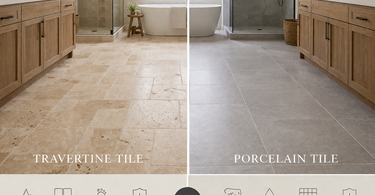
Choosing between travertine and porcelain tile is one of the most common — and most important — decisions homeowners make when designing a bathroom or selecting flooring for their home.
At first glance, they can even look similar. Porcelain manufacturers often design tiles that imitate natural stone, including travertine. But once installed and used daily, these two materials behave very differently.
This guide will walk you through every practical difference that matters before you buy: appearance, slip resistance, durability, grout choices, maintenance, comfort, long-term aging, and where each tile truly performs best.
Explore both options here:
https://mosaicbros.com/collections/travertine-tiles
https://mosaicbros.com/collections/porcelain-tiles
Understanding the Core Difference: Natural vs Manufactured
Travertine is a natural limestone formed by mineral deposits over thousands of years. Every tile is unique, with natural movement, texture, and variation.
Porcelain is a man-made tile created from refined clay, pressed and fired at high temperatures. Its design is printed on the surface for a consistent, repeatable look.
This one difference affects everything else.
Appearance: Authentic Character vs Printed Consistency
Travertine offers:
- Natural color variation
- Organic texture
- A timeless, high-end stone look
- No repeating patterns
Porcelain offers:
- Uniform appearance
- Controlled color tones
- Stone-look designs without variation
- Repeating printed patterns over large areas
If you want a floor that looks custom and luxurious, travertine stands out. If you want visual consistency, porcelain delivers.
Slip Resistance in Bathrooms (Very Important)
Bathrooms are wet spaces. Slip resistance matters more than appearance.
Tumbled or honed travertine naturally provides grip because of its surface texture.
Many porcelain tiles, especially polished or smooth finishes, can become slippery when wet unless specifically rated for slip resistance.
This is one reason travertine has been used in bathrooms for centuries.
Comfort Underfoot
Travertine feels:
- Warmer
- Softer
- More natural to walk on
Porcelain feels:
- Harder
- Colder, especially in winter
- More rigid
For barefoot bathroom use, travertine is noticeably more comfortable.
Durability and Wear Over Time
Porcelain is extremely dense and resistant to scratching and moisture.
Travertine is durable but porous and must be sealed.
However, here is the key difference most blogs don’t mention:
- Porcelain shows chips clearly because the body underneath is different from the printed surface.
- Travertine hides wear because its color and texture go all the way through the stone.
Travertine ages gracefully. Porcelain stays the same.
Maintenance Reality
Travertine requires:
- Sealing after installation
- pH-neutral cleaners
- Occasional resealing
Porcelain requires:
- Basic cleaning
- No sealing
Porcelain wins for low maintenance. Travertine wins for natural aging and beauty.
Grout Color Considerations
Travertine pairs best with:
- Beige
- Ivory
- Sand tones
Avoid white grout.
Porcelain often works with:
- White
- Gray
- Matching grout colors
Grout dramatically changes the final look of travertine floors.
Best Tile Sizes for Each Material
Travertine
- 12x12 classic layouts
- 12x24 modern layouts
- Mosaics for shower floors
Porcelain
- Large format tiles
- Rectified edges for tight grout lines
Where Travertine Performs Best
- Bathroom floors
- Shower floors (mosaics)
- Kitchen floors
- Living areas
- Entryways
Browse options:
https://mosaicbros.com/collections/travertine-tiles
Where Porcelain May Be the Better Choice
- Commercial spaces
- Areas with constant standing water
- Homes where zero maintenance is preferred
- Outdoor freezing climates
Browse options:
https://mosaicbros.com/collections/porcelain-tiles
Design Flexibility
Travertine works in:
- Rustic
- Mediterranean
- Modern
- Farmhouse
- Spa-style bathrooms
Porcelain works best in:
- Ultra-modern
- Minimalist
- Contemporary designs
Common Mistakes Homeowners Make
- Choosing polished porcelain for bathrooms (slippery)
- Choosing white grout with travertine
- Not sealing travertine
- Expecting porcelain to age like stone
Frequently Asked Questions
Is travertine harder to maintain than porcelain?
Slightly, but not difficult.
Is porcelain stronger than travertine?
Porcelain is denser, but travertine is very durable when installed correctly.
Which is safer for bathroom floors?
Tumbled or honed travertine.
Which adds more home value?
Natural stone like travertine.
Long-Term Value and Aesthetics
Travertine is seen as a premium natural material that increases perceived home value.
Porcelain is practical and cost-effective but does not have the same luxury perception.
Final Verdict: Which Should You Choose?
Choose travertine if you want:
- Natural beauty
- Warmth
- Slip resistance
- Timeless appeal
- A floor that ages beautifully
Choose porcelain if you want:
- Low maintenance
- Uniform appearance
- Maximum moisture resistance
- Practical performance
Both are excellent — but for very different reasons.
Explore both collections here:
https://mosaicbros.com/collections/travertine-tiles
https://mosaicbros.com/collections/porcelain-tiles
